f---
3️⃣ Core Fundamentals (Must Know)
1. Storage
Types:
- Relational DB (tables)
- Document DB (JSON)
- Key-value store
Concepts:
ACIDvsBASE- Choose based on access patterns
2. Scalability
- Vertical → bigger machine
- Horizontal → more machines
Techniques:
- Sharding
- Partitioning
- Consistent hashing
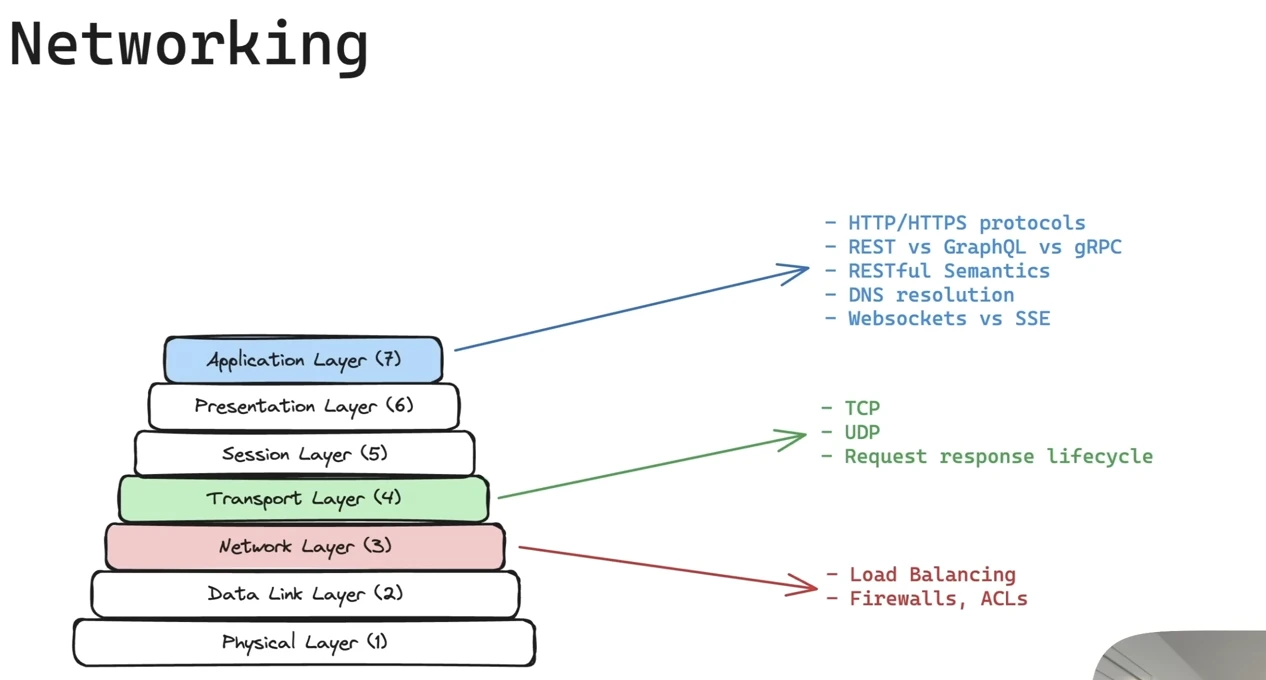
3. Networking
Important Layers:
- Application → APIs, WebSockets
- Transport → TCP vs UDP
- Network → Load balancer
4. Performance
Concepts:
- Latency
- Throughput
- Bottlenecks
Optimization:
- Caching
- Efficient queries
5. Fault Tolerance
- Failures are unavoidable
Techniques:
- Replication
- Redundancy
- Failover
6. CAP Theorem
- Choose between:
- Consistency
- Availability
- Partition tolerance
- Partition tolerance is always required
4️⃣ Key Components in Systems
Database
- SQL or NoSQL both can scale
- Choose based on:
- Read/write patterns
Cache
- Example: Redis
- Fast access
- Stores frequently used data
Trade-off:
- Consistency issues
Message Queue
- Enables async communication
Examples:
- Kafka
- RabbitMQ
Use Cases:
- Handle traffic spikes
- Decouple services
Load Balancer
- Distributes traffic
- Prevents overload
Blob Storage
- Stores large files (images, videos)
- Example: S3
CDN
- Global cache layer
- Faster content delivery
5️⃣ How to Prepare Effectively
Learning Approach
- Try problem yourself 🧠
- Identify gaps
- Research (Google / ChatGPT)
- Watch solution
Strategy
- Don’t memorize → learn patterns
- Focus on trade-offs
- Practice mock interviews
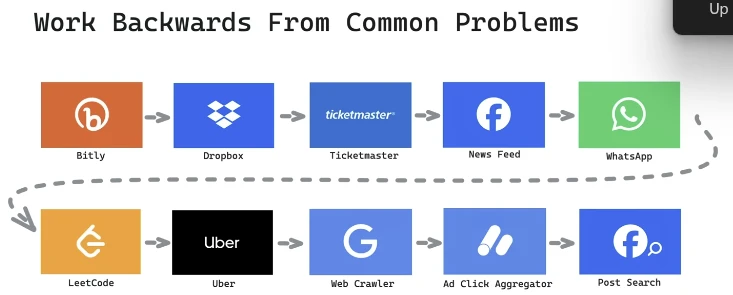
Recommended Problems Order